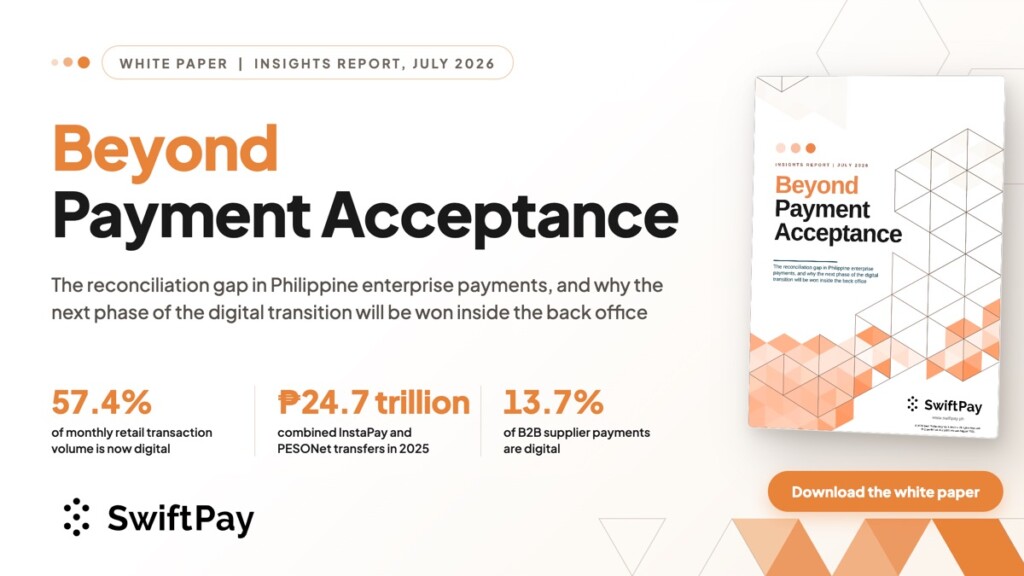
What the reconciliation gap costs, and how to close it. Free download for CFOs and finance heads.
Payment acceptance is largely solved. Matching those payments in the back office isn't. This paper shows where the gap sits and how finance teams close it.
White paper
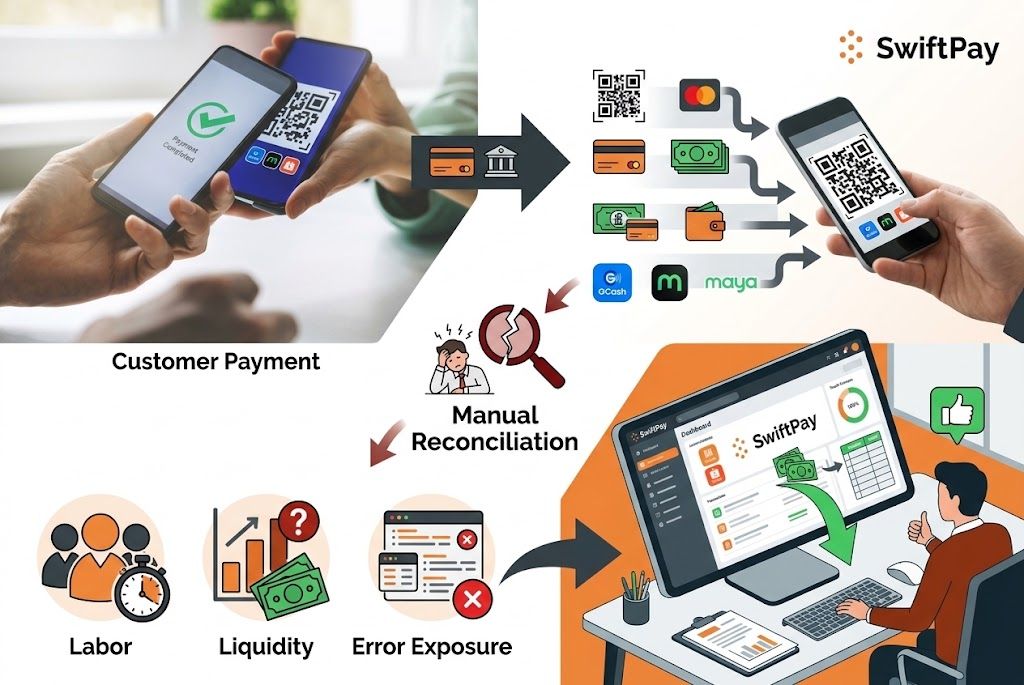
The Philippines has effectively won the war for digital payment acceptance. But BSP data shows payments made by businesses are just 19.8 percent digital by volume, and B2B supplier payments are only 13.7 percent digital. This insights report argues that the reconciliation gap, the distance between a payment being confirmed and that cash being ledgered, visible, and actionable inside the enterprise's core systems, is now the binding constraint on the Philippine digital payment story. It examines the three costs of the gap in labor, liquidity, and error exposure, the tightening BSP regulatory agenda, and why integration over replacement is the realistic architecture for enterprise finance teams. Prepared by SwiftPay, a BSP-regulated Operator of Payment System (OPS).
What's in it
Business payments are just 19.8 percent digital by volume.
B2B supplier payments are only 13.7 percent digital.
The reconciliation gap is now the binding constraint on digital payments.
The three costs of the gap: labor, liquidity, and error exposure.
Integration over replacement as the realistic architecture for finance teams.

 Blog & Articles